
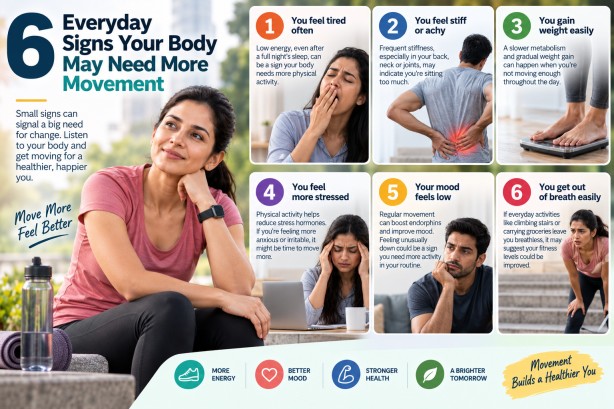
Incorporating more movement into daily life is often necessary long before any pain signals arise. A sedentary lifestyle, characterized by prolonged sitting at a desk, driving, or general inactivity, can subtly undermine flexibility, strength, balance, and energy. Recognizing these early indicators can prompt an increase in physical activity before it disrupts daily routines.
One of the early signs is stiffness after sitting. If standing up from a seated position leaves your back, hips, shoulders, or legs feeling stiff, it might be time to introduce regular movement breaks throughout your day. These breaks can help maintain joint comfort and prevent the negative effects of extended inactivity. Similarly, experiencing fatigue from simple tasks like climbing stairs, walking short distances, or doing household chores may suggest the need to boost fitness levels. Consistent physical activity can improve stamina over time, making these everyday tasks more manageable.
Feeling sluggish is another common consequence of inactivity, affecting both physical and mental states. This can often occur after sitting for hours, making it difficult to remain energetic and alert. Short walks, stretching sessions, or quick movement breaks can effectively interrupt sedentary periods, enhancing both physical and mental vitality. Additionally, if you notice a decline in your balance, such as difficulty standing on one leg or navigating stairs, it may be time to focus on balance and coordination exercises. Incorporating walking, strength training, and simple balance activities can significantly improve stability.
Posture issues are also indicative of a lack of movement. Regularly slumping at your desk or struggling to maintain a comfortable sitting or standing posture might result from extended sitting and underused muscles. Strengthening the back, legs, and core, along with taking regular breaks from sitting, can foster better posture and movement. Moreover, if routine movements like bending, squatting, or rising from a chair become increasingly challenging, it’s essential not to dismiss these as mere signs of aging. Introducing gradual activity can help preserve strength, flexibility, mobility, and independence.
Increasing daily movement does not require lengthy gym sessions. Simple strategies, such as taking short walking breaks during work, stretching after sitting, choosing stairs when feasible, and incorporating basic strength or balance exercises can be effective. Consistency is key; regular, small amounts of movement are often more sustainable than sporadic intense workouts. However, if changes in movement are accompanied by persistent stiffness, significant weakness, numbness, dizziness, or ongoing pain, consulting a healthcare professional is advisable. Ultimately, by being attentive to your body’s cues—such as stiffness, low stamina, poor balance, sluggishness, or difficulty in daily tasks—you can proactively integrate more movement into your routine, supporting strength, mobility, energy, and overall well-being at any age.