
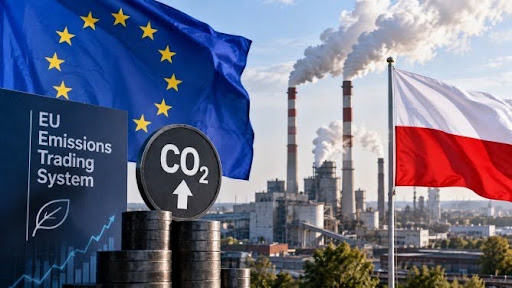
As Poland navigates the complexities of transitioning from one of Europe’s most coal-reliant energy systems, the country is grappling with rising costs associated with the European Union’s Emissions Trading System (ETS). The financial burden of these costs is significantly impacting Polish businesses, with energy-sector representatives highlighting that ETS expenses can constitute up to 50% of electricity prices for some industrial consumers. This figure starkly contrasts with the EU average, which is estimated to be around 11%.
Polish officials are voicing concerns over the heightened costs, emphasizing the unique challenges the country faces during this energy transition. They argue for adjustments to the ETS framework that could alleviate the financial strain while still enabling Poland to reduce its carbon emissions. Despite the hurdles, Poland is making significant strides in expanding its renewable energy portfolio, with renewable sources accounting for 41.6% of the electricity mix as of July. This development marks a milestone, as renewable generation has, for the first time, surpassed coal-fired power in the country.
In addition to bolstering renewable energy, Poland has been actively working to reduce its reliance on Russian gas. The country has achieved this by diversifying its energy supplies through liquefied natural gas (LNG) imports and the utilization of the Baltic Pipe. These efforts underscore Poland’s commitment to enhancing energy security while transitioning to a more sustainable energy system.
Despite these advancements, Polish authorities are keen to ensure that the energy transition does not compromise the country’s industrial competitiveness. They are advocating for more flexibility in the implementation of ETS costs and for adequate time to adjust. This approach, they argue, is crucial for safeguarding the economic interests of Polish industries while continuing to pursue environmental goals. The government is also emphasizing the need for ongoing investment in new power-generation capacities, electricity grids, and storage solutions to support this transition.