
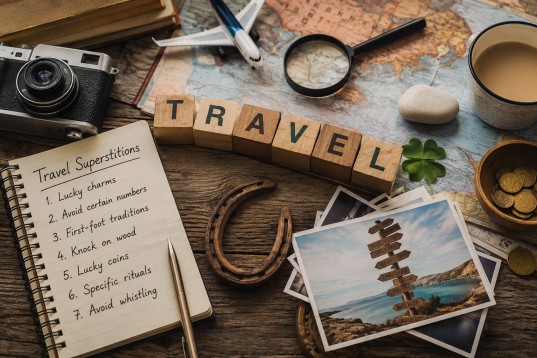
Throughout various cultures, travel customs and superstitions have been cherished and handed down over generations. These practices, often rooted in folklore, are believed to bring good fortune, shield against misfortune, and ensure safe travels. Despite their ancient origins, travelers today continue to uphold these traditions as valued rituals during their journeys.
One such tradition involves carrying a clove of garlic, common in several Balkan cultures. It’s thought to safeguard travelers from negative energies and misfortune, with some individuals placing it in their luggage for a smooth journey. Similarly, many air travelers partake in the ritual of lightly touching the airplane’s exterior before boarding, a gesture symbolizing trust, gratitude, and a wish for a safe flight. It also serves as a method to alleviate travel anxiety for some.
Another popular custom is stepping onto the plane with the right foot first, a practice stemming from the belief that beginning any endeavor with the right foot brings good luck. This conscious action is intended to set a positive tone for the trip. Additionally, in Eastern Europe and parts of the Middle East, family members often sprinkle water behind a departing traveler. The flowing water is seen as a metaphor for a smooth and successful journey, ensuring a safe return.
Mindfulness of numbers considered unlucky in various cultures is yet another superstition observed by many travelers. In Western countries, the number 13 is frequently avoided, while in East Asia, the number 4 is shunned due to its association with death. In Italy, the number 17 is similarly regarded with superstition. Consequently, some hotels, buildings, and airlines exclude these numbers from room or seat arrangements. Another tradition, prevalent in Slavic countries, involves sitting on packed luggage for a brief moment before departure. This pause allows travelers to relax, recall any forgotten items, and mentally prepare for the journey ahead.
Ultimately, these customs, though based on tradition rather than scientific proof, continue to be an intriguing aspect of global travel culture. Whether they are seen as harbingers of good luck or comforting rituals, they reflect the enduring human desire for reassurance and positivity before embarking on a journey.