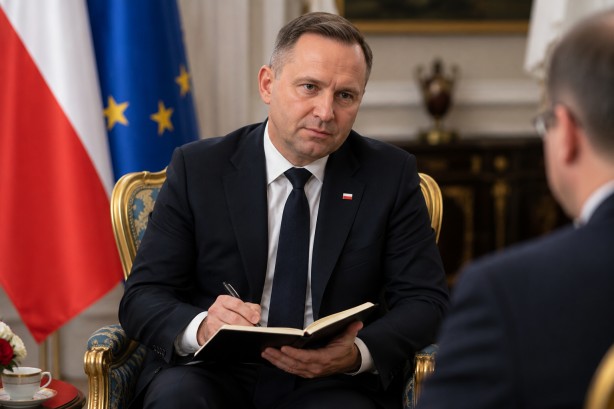
Poland’s President Karol Nawrocki has come under scrutiny for his conduct during a recent meeting with scholars, artists, and media figures at the presidential residence in Klarysew. The focus of the criticism was Nawrocki’s use of a notebook, which he reportedly utilized to take notes, refer to them throughout the discussions, and pose questions. This behavior was highlighted in a critical report, provoking both mockery and defense from online users and some Polish officials who argued that such preparation should be considered typical for any meeting.
Since assuming office, President Nawrocki has actively engaged with members of the academic, artistic, and media sectors through a series of meetings. His administration has also been responsible for numerous appointments to the prestigious academic title of professor, with 111 such appointments recorded in July alone. These initiatives underscore Nawrocki’s commitment to fostering relationships with Poland’s academic and intellectual communities.
The recent events have sparked a broader conversation about the president’s interactions with these communities and the media’s portrayal of his public activities. While some view the president’s approach as diligent and professional, others see the media coverage as overly critical and unwarranted. This debate highlights the complexities of political leadership and the scrutiny that accompanies public office.
Despite the criticism, Nawrocki continues to prioritize his engagement with academia and the arts, reflecting his administration’s broader focus on education and culture. The ongoing discussions surrounding his recent meeting are indicative of the larger challenges faced by public figures in balancing transparency and effective governance.