
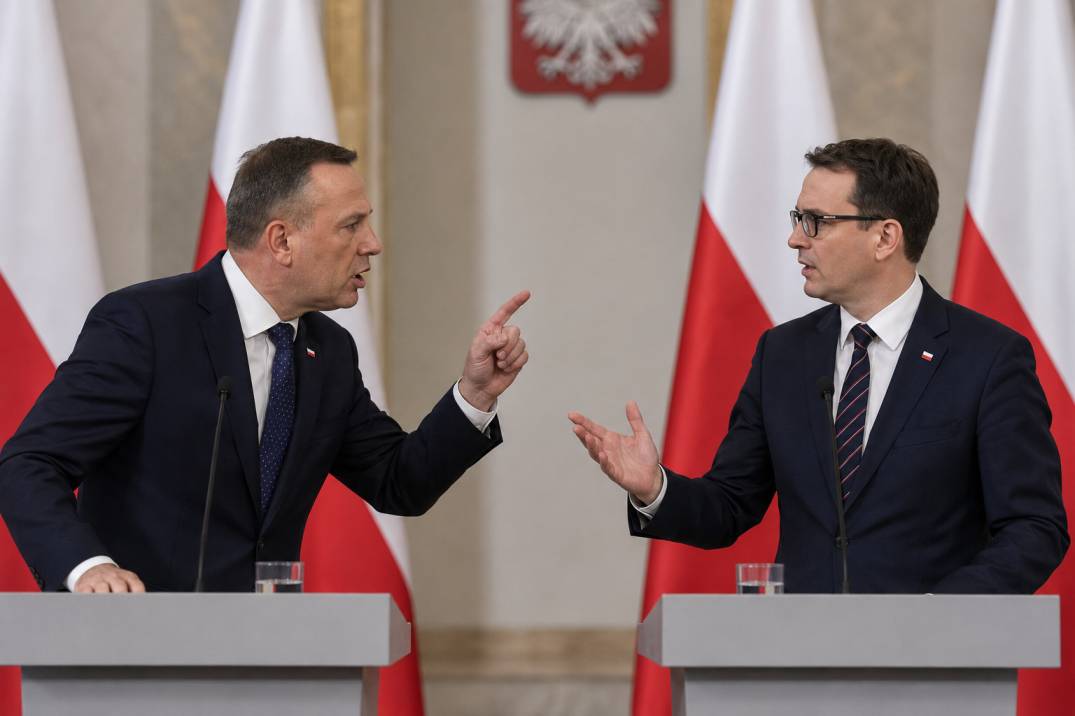
A recent statement by Chargé d’Affaires Piotr Łukasiewicz during the Volhynia Massacre commemorations in Ukraine has sparked a political dispute in Poland. Łukasiewicz’s remarks, which recognized both Polish victims of Ukrainian violence and Ukrainian victims of actions by the Polish state, have drawn criticism from various public factions and political leaders. His comments have reignited discussions about the complex history between Poland and Ukraine and the interpretation of these historical events.
In response to the backlash, Foreign Minister Radosław Sikorski stood by Łukasiewicz, offering his support for the diplomat’s remarks. Deputy Minister Andrzej Szeptycki also defended Łukasiewicz and took the opportunity to critique President Karol Nawrocki’s comments on the historical relations between the Second Polish Republic and national minorities. Szeptycki emphasized that the historical policies toward minorities should not be considered “normal,” pointing to events such as the Pacification of Eastern Galicia and the discrimination faced by minority communities. His stance has been met with resistance from opposition lawmakers, who argue that he is minimizing the historical violence endured by Poles.
This debate underscores the persistent tensions in Poland regarding the interpretation of historical events, particularly those surrounding the Volhynia Massacre and the broader Polish-Ukrainian relations. The controversy reflects the ongoing struggle within Poland to reconcile its history, especially concerning its interactions with neighboring countries and minority groups within its borders.
The differing perspectives on the historical narrative highlight the challenges in addressing the past while fostering a constructive dialogue for the future. Political leaders and historians alike continue to navigate these sensitive topics, seeking a balanced approach that acknowledges the complexities of historical events without diminishing the suffering of any group involved.
As the discussion unfolds, it remains a focal point in Polish political discourse, illustrating the intricate and often contentious nature of historical interpretation and its impact on current international and domestic relations.